THE ARCHAEOLOGY
OF SPATIAL INNOVATION
Reconnecting a fragmented landscape through the spatial and social logic of the Persian bazaar.
- Type
- Master of Urban Design · Design Thesis
- Site
- Abbasabad Hills · Tehran, Iran
- Supervisor
- Professor Alan Pert
- Status
- Academic design proposal
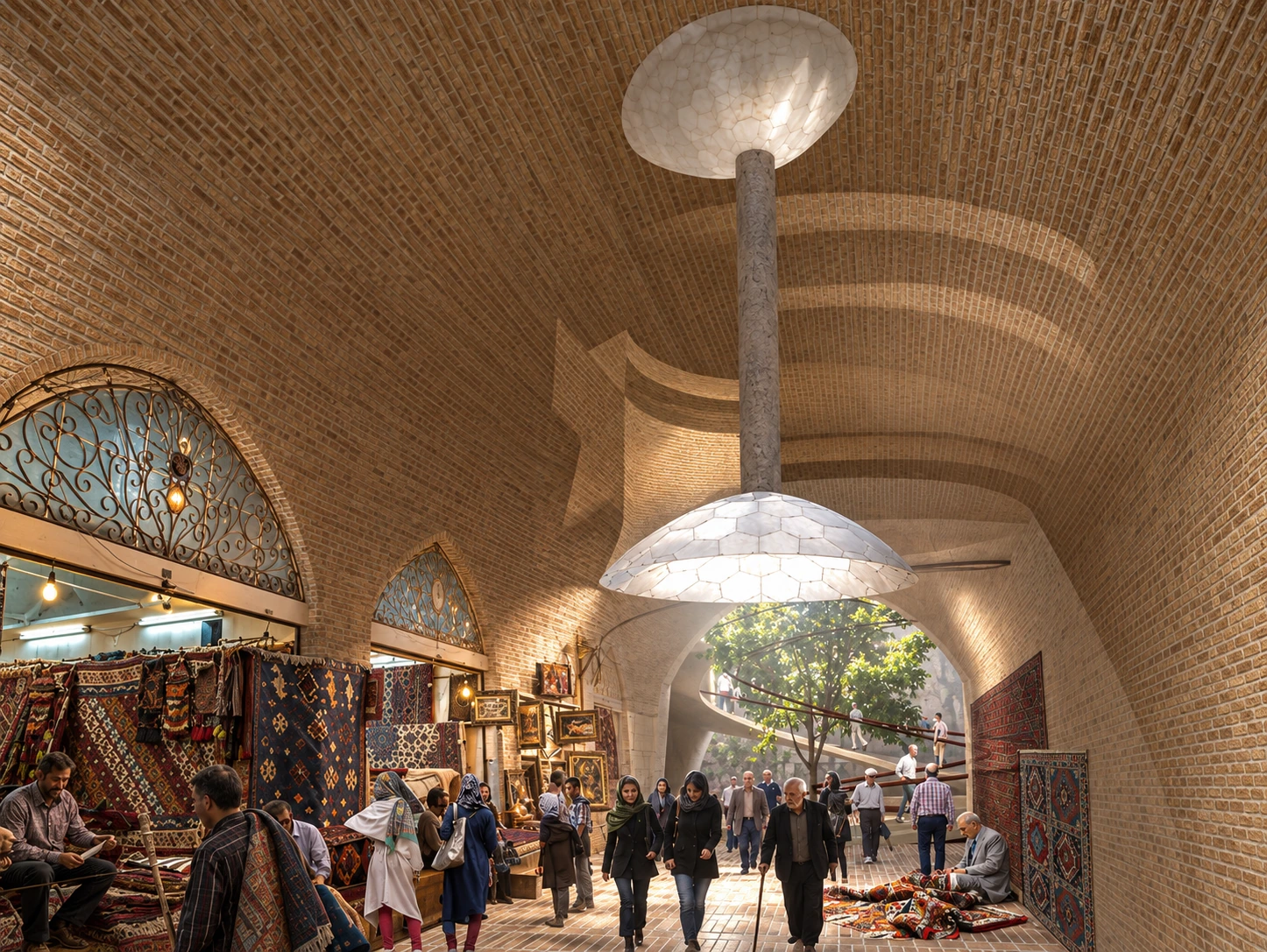
How can a landscape at the heart of a city become part of its everyday life?
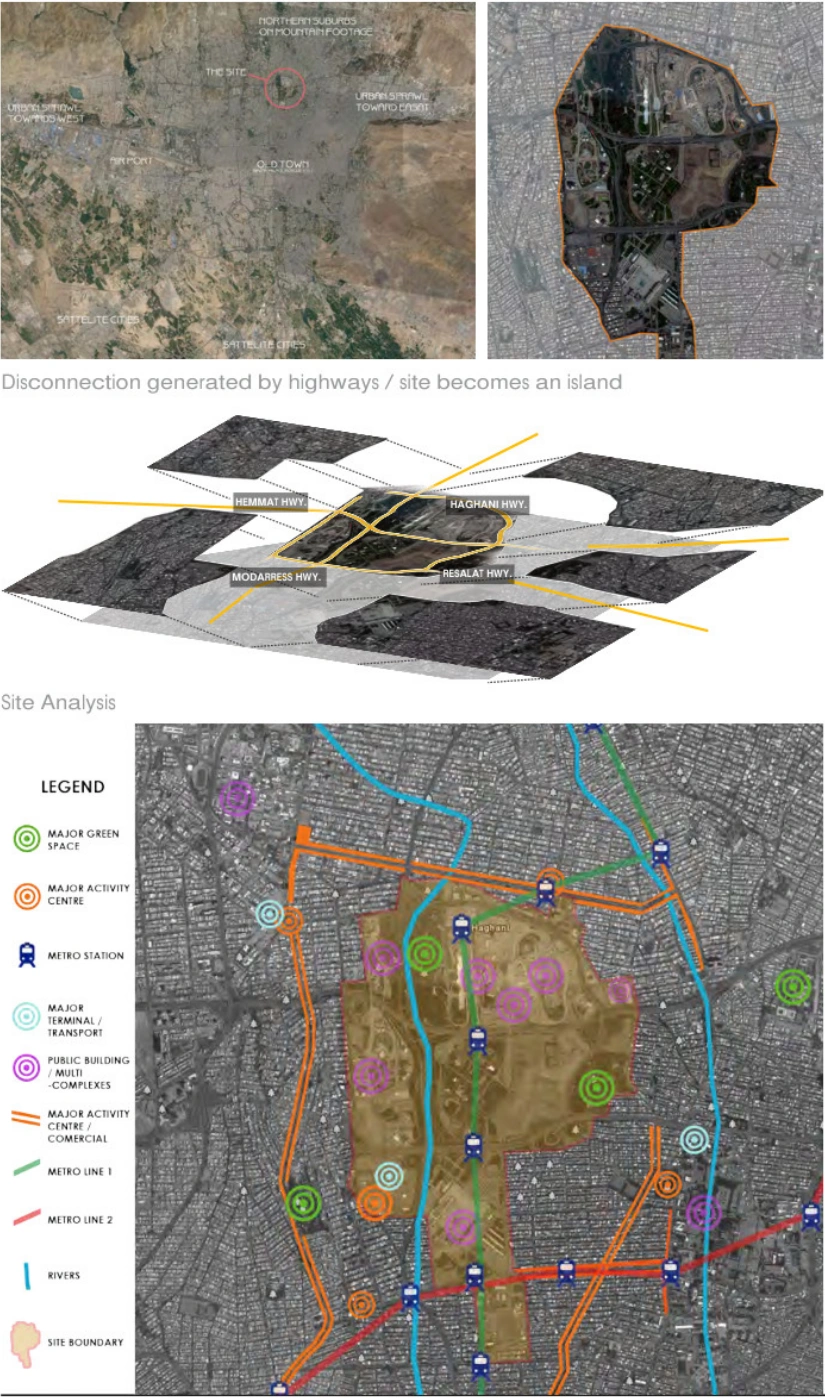
This thesis examines Abbasabad Hills, where highways separate public destinations from surrounding neighbourhoods and from one another. Drawing on the history of Persian cities, it reinterprets the bazaar as a framework for movement, exchange and gathering.
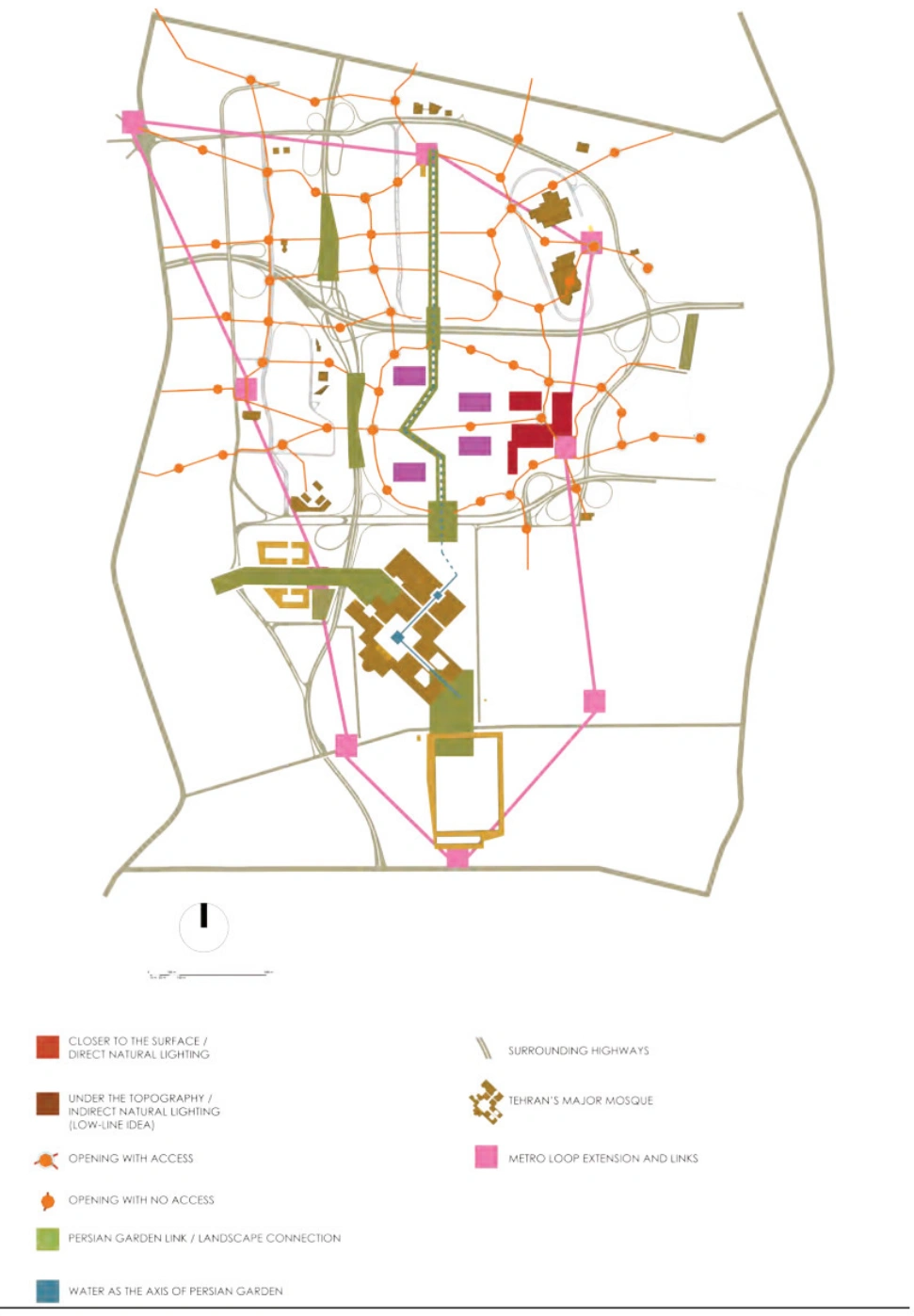
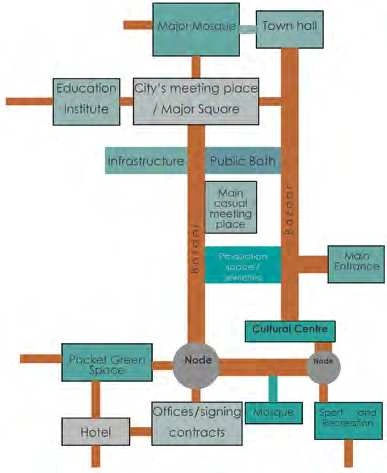
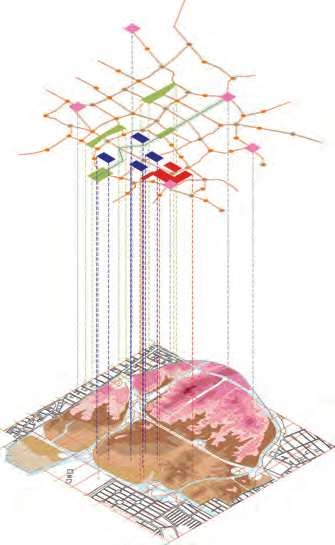
The proposal introduces an underground pedestrian network linking public spaces, cultural destinations and transport nodes while maintaining continuity in the landscape above. Active commercial frontages support everyday activity along the routes. Sunken gardens and identifiable entrances connect the network to the surface, becoming places to pause, meet and find one’s way.
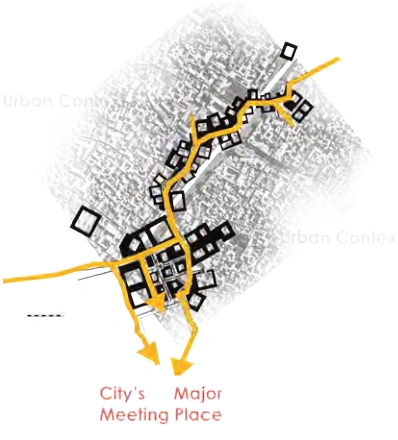
The site analysis examines an urban island separated by highways, then connects landscape, destinations and movement.
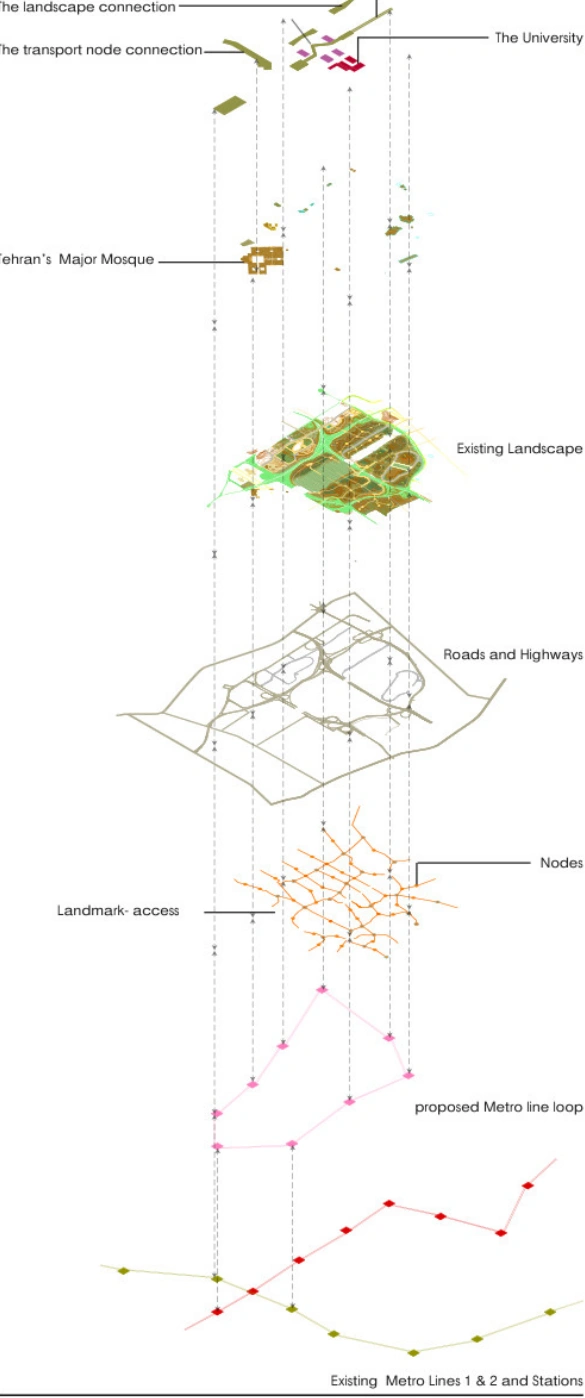
Reinterpreting the arch, dome, windcatcher, timcheh and sunken garden.
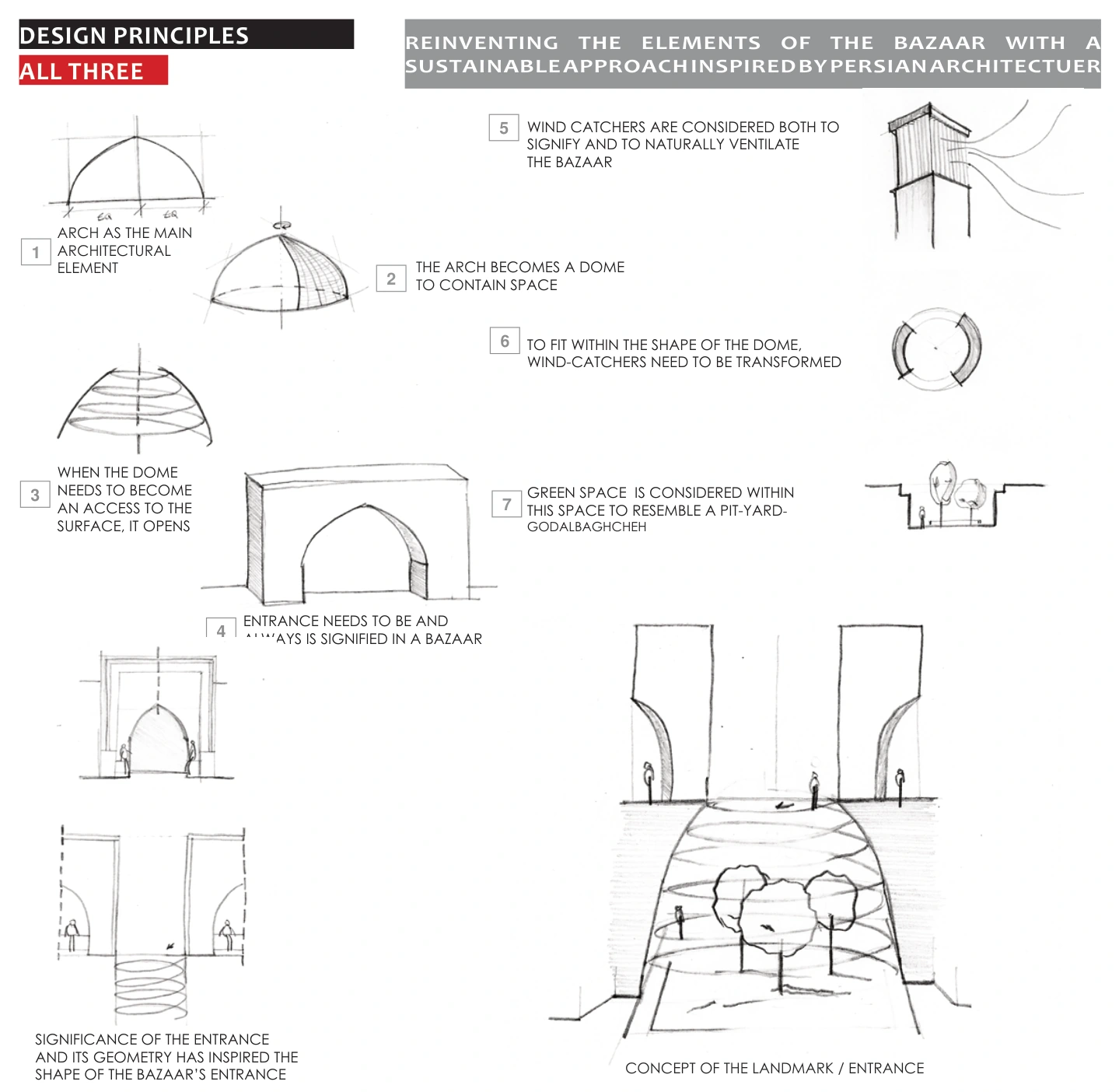
Landscape above. Urban life below.
The landscape and pedestrian network follow different rhythms. Above, the terrain retains its changing topography; below, routes are designed with gentle gradients to make walking more comfortable.
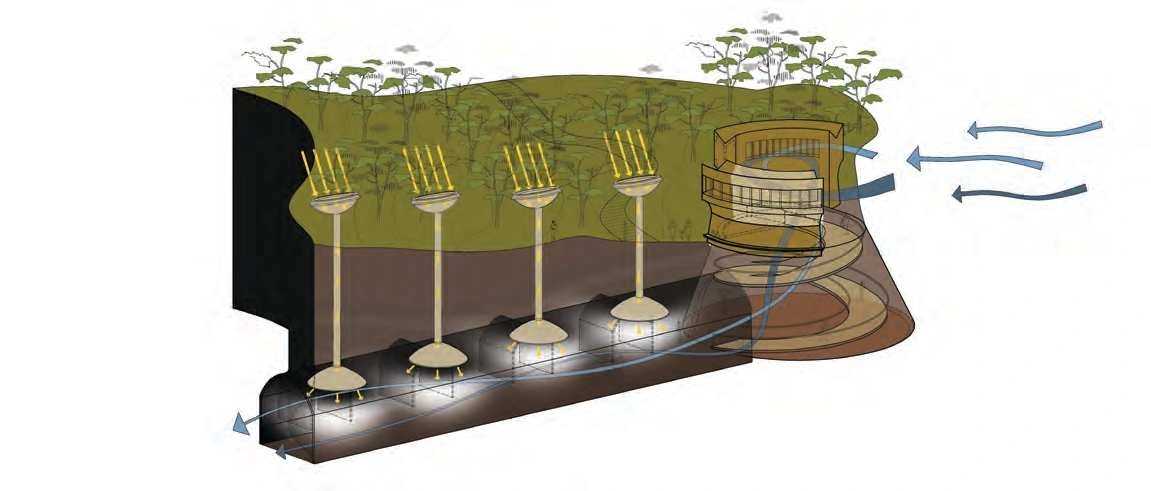
Daylight enters directly where the network approaches the surface. At greater depths, the proposal explores solar collectors and light channels. Reinterpreted windcatchers combine entrance markers with a natural ventilation strategy.
Together, these elements translate lessons from Persian urbanism into a contemporary design proposal connecting landscape, infrastructure and public life.
The design explores conceptual approaches to daylight, ventilation and the relationship between the surface landscape and the bazaar.
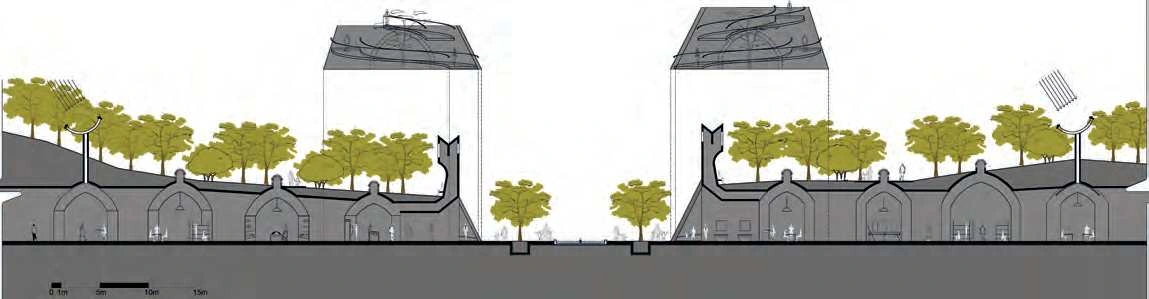
A car-free network connects neighbourhood activities, gardens and public spaces.
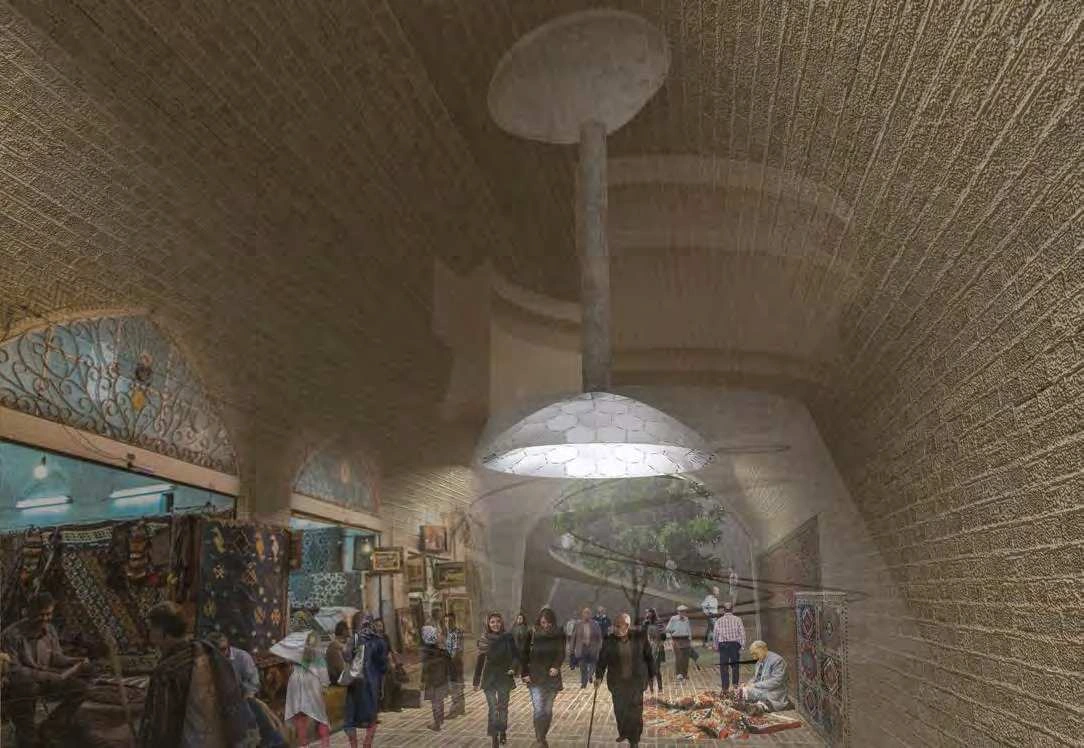
The complete sectional sequence brings together the metro connection, underground bazaar, central entrance and surface landscape.
